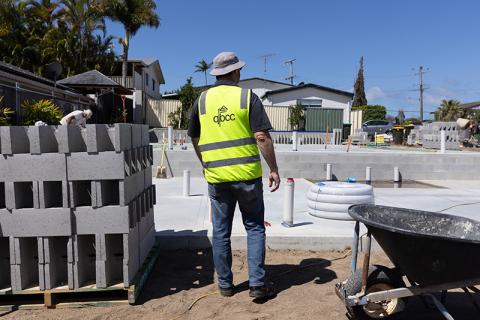
The Regulatory Intelligence Annual Trend Analysis FY2025–26 indicates Queensland’s building and construction industry continues to operate in a complex and fast-changing environment, shaped by strong housing demand, major infrastructure investment, workforce constraints, affordability pressures and ongoing market adjustment.
It also highlights a resilient industry that continues to face risks affecting project delivery, business performance, and consumer confidence.
Importantly, the analysis does more than reflect on the year that has passed. It also provides a forward-looking evidence base to support regulatory planning and decision-making for FY2026–27.
As a result, the QBCC’s near-term regulatory priorities will focus on the issues most likely to influence industry stability, compliance and outcomes for Queensland consumers over the coming months.
These include:
1. Monitoring housing delivery conversion
Increasing housing supply remains a key priority across Queensland. However, approvals alone do not deliver homes.
The QBCC will continue monitoring how effectively approved housing projects progress through construction and reach completion.
This will be done by analysing a range of housing, construction, and regulatory data sources, including building approvals, construction commencements, work done, dwelling completions, the Queensland Home Warranty Scheme activity, workforce indicators, and builder viability trends.
The analysis will help identify whether approved housing projects are progressing through construction and reaching completion, and where emerging pressures may be affecting housing supply.
Understanding where projects are succeeding—and where they may be stalling—provides important insights into the effectiveness of policy settings, investment programs and infrastructure activation.
By tracking the journey from approval to completion, we can help identify barriers affecting housing delivery and contribute valuable intelligence to support better housing outcomes for Queenslanders.
Ultimately, our focus is on ensuring housing approvals translate into real homes for Queensland communities.
2. Strengthening early warnings for builder viability
Financial pressures remain a challenge across parts of the construction industry.
Rising operating costs, labour shortages, cash-flow pressures, and changing market conditions can increase business stress and create risks for project delivery.
The QBCC will continue to monitor indicators that may signal emerging viability concerns about our licensees, including:
- project delays or pauses
- contract repricing activity
- staged project delivery
- payment delays
- significant contract variations
- subcontractor withdrawals
- fixed-price contract exposure.
Using a range of intelligence sources, we are strengthening our ability to identify risks earlier and better understand trends affecting industry stability.
This proactive approach supports more informed regulatory decision-making while helping minimise impacts on consumers, businesses and projects.
3. Maintain consumer protection focus
Protecting consumers remains at the heart of the QBCC’s regulatory role.
Over the coming months, we will continue to focus on issues such as unlicensed work, licence verification, defect visibility and affordability-driven complaint trends.
These priorities will be supported through compliance audit campaigns and ongoing educational engagement with licensees across Queensland.
We are also expanding our use of digital tools and data analytics to identify and map higher-risk licence holders. This allows us to better understand where defects occur most frequently, identify emerging risk patterns and target regulatory effort where it is needed most.
Rather than applying a one-size-fits-all approach, this intelligence-led model helps us deliver more timely, effective and proportionate regulatory outcomes.
4. Strengthening contract and dispute intelligence
Contract variations, extensions of time, cost-relief requests and payment disputes are often early indicators of pressure within the construction market.
The QBCC will continue monitoring these trends to better understand emerging risks and identify where guidance, early intervention or regulatory attention may be required.
As affordability pressures continue to affect both home owners and contractors, maintaining visibility over dispute trends is increasingly important. These insights help us better understand consumer concerns, industry challenges and changing market conditions.
Maintaining confidence in the construction industry requires strong oversight, transparent processes and clear pathways for consumers to raise concerns and seek resolution when issues arise.
5. Strengthening governance and audit traceability
Public confidence in the construction sector relies on strong governance, transparency and accountability.
The QBCC will continue to monitor developments arising from the CFMEU Inquiry, alongside contractor vetting processes, probity controls and documentation standards, particularly across high-risk or high-profile projects.
Good record-keeping and robust audit trails remain critical for demonstrating compliance and supporting accountability throughout the construction process.
For licensees, clear documentation provides the evidence needed to demonstrate quality work and support decision-making if concerns arise.
Practical steps builders and contractors can take include:
- maintaining clear subcontractor agreements
- keeping payment records and quality assurance documentation
- recording site progress through photographs
- retaining evidence that work was completed appropriately before subsequent trades commenced.
Strong documentation practices can help reduce disputes, improve accountability, and support better building outcomes across the industry and for consumers.
6. Monitoring workforce and supervision risk
Workforce availability continues to be one of the industry’s most significant challenges.
In addition, Queensland’s licensed contractors are facing a skills shortage and an ageing workforce with more than one third (38%) aged over 55. To put that into perspective, over the next decade, one third of licensees will be looking to retire and yet only 6% of licensees are under 30 years of age.
The QBCC will continue to monitor trends in apprenticeships, trade availability, regional workforce shortages and supervisory capacity across the sector.
Where businesses are operating with reduced workforce availability, risks to quality, compliance and project delivery can increase. Effective supervision remains critical to maintaining standards and ensuring work is completed in accordance with regulatory requirements.
By understanding workforce pressures and their impacts, the QBCC can identify areas where additional education, industry support or regulatory attention may be needed.
7. Targeted regional and high-pressure locations
Regional Queensland and rapidly growing areas often face unique construction challenges.
Higher freight costs, strong housing demand, workforce shortages and competition from major infrastructure projects can create additional pressure on project delivery and industry capacity.
The QBCC will continue monitoring locations where these factors intersect, particularly where they may affect construction quality, completion timeframes or consumer outcomes.
This intelligence-led approach helps us identify communities where additional compliance activity, education programs or stakeholder engaent may be required to support sustainable building activity and protect home owners.
Through proactive regulation and evidence-based decision-making, we will continue working to support a safe, sustainable and trusted building and construction industry for all Queenslanders.