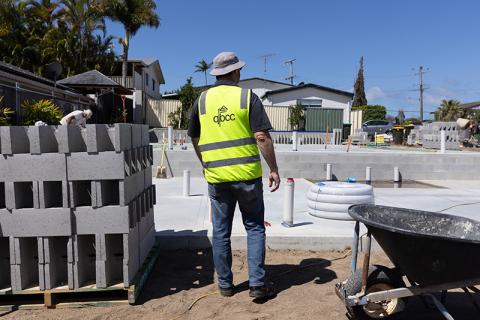
Queensland has strong laws in place to prevent non conforming building products being used in buildings. While the QBCC has focused heavily on educating manufacturers and suppliers—visiting more than 650 businesses and attending industry trade shows—these laws apply to everyone in the chain of responsibility, including builders and trade contractors.
If you install, or arrange for the installation of a building product, you are part of that chain. This means you have a positive legal duty to take reasonable and proactive steps to make sure the product you install is not an NCBP.
What this means for builders and trade contractors
The NCBP laws are designed to prevent problems before they occur. Rather than reacting after a defect is identified, you must be satisfied—before installation—that a product:
- meets all relevant regulatory provisions
- is safe
- performs as it is represented to do.
If a product fails any of these tests, it is an NCBP and must not be installed.
Understanding the regulatory requirements
A key step in meeting your obligations is checking whether a product complies with the National Construction Code (NCC), including:
- the Building Code of Australia (Volumes One and Two)
- the Plumbing Code of Australia (Volume Three).
The NCC often relies on Australian Standards (AS), which set additional technical requirements for products.
The QBCC Act links these requirements to the relevant regulatory provisions under Queensland legislation, including the Building Act 1975 and the Plumbing and Drainage Act 2018. Together, these provisions determine whether a product is suitable for its intended use.
Evidence of suitability—what to look for
The NCC recognises several forms of evidence of suitability. Importantly:
- CodeMark certificates are the only form of evidence that must be accepted under the Building Regulation 2021. Always check any limitations on a CodeMark certificate to ensure it covers the proposed use.
- Test or assessment reports from a NATA accredited testing laboratory are often required, particularly for fire safety products.
- Passive fire protection products (such as fire doors, party walls and service penetrations tested under AS 1530.4) must have their Fire Resistance Level (FRL) verified by an accredited testing laboratory.
- Engineering reports may be relied on where prepared by an appropriately qualified professional, such as a Registered Professional Engineer of Queensland (RPEQ).
- Plumbing and drainage products must be supported by a valid WaterMark certificate.
If testing has not been carried out by a NATA accredited organisation, the building certifier must be satisfied that the testing body is competent.
Other laws that may apply
Meeting NCC requirements is not always the end of the process. Depending on the product, other regulatory frameworks may apply, including:
- the Electrical Safety Act 2002 (for electrical products, solar PV systems and smoke alarms)
- the Work Health and Safety Act 2011 (including data safety sheets and codes of practice)
- the Fire Services Act 1990 (covering ongoing maintenance of fire safety features)
- requirements administered by the Australian Pesticides and Veterinary Medicines Authority (APVMA) for termite management products.
This is not an exhaustive list. It’s important to consider all regulatory requirements relevant to the product you are installing.
Required information—don’t install without it
Designers, manufacturers and suppliers have a legal duty to provide required information with a building product. This information explains:
- whether the product is suitable for its intended use
- any conditions or limitations on that use
- how the product must be installed and used to ensure it is not an NCBP.
As a builder or trade contractor, you should always request this information before installing a product.
If a product is supplied by a building owner, you should also ask for:
- testing documentation
- full, unedited reports
- traceability evidence linking the product to test reports or certifications.
Clear, transparent and verifiable information helps protect everyone in the chain of responsibility.
Suspected NCBPs must be reported
You must be satisfied that a product is not an NCBP before installing it. If you become aware of a suspected NCBP, you are required to report it to the QBCC as soon as practicable, and no later than two days after becoming aware of it.
Failure to meet your obligations may result in regulatory action, including:
- notices to remedy
- investigations and prosecution
- consideration of executive officer liability
- referral for product warnings or recall action.
Learn more
For full details of your obligations, refer to Part 6AA of the QBCC Act.
The QBCC website also provides a wide range of practical resources, including webinars, fact sheets and technical guides about NCBPs. Visit the Resources section and filter by NCBP.
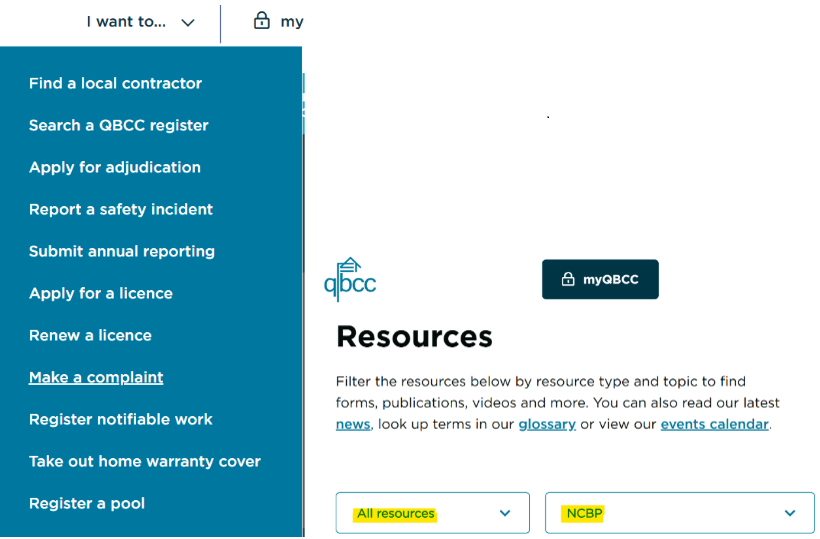
You can report suspected NCBPs or direct enquiries to ncbp@qbcc.qld.gov.au or submit a complaint online via
I want to… > Make a complaint > Non conforming building products.
Disclaimer
This article is for general information only and does not constitute legal or professional advice. While the QBCC aims to provide accurate and current information, it does not guarantee the completeness or accuracy of this content. You should obtain independent professional advice about how the NCBP laws apply to your circumstances.