
Purpose of this kit
This kit provides ready-to-use content to help industry bodies, associations and partners share clear information with their members about the QBCC’s refined Direction to Rectify (DTR) process is applied. It ensures directions go to the licensed party genuinely responsible for the work.
Below you will find newsletter content, social media posts, tiles and other background information you can share across your newsletters, websites or social media platforms (feel free to tag us in your post).
Background
In October last year, the QBCC held an industry taskforce highlighting the importance of clear, consistent accountability for defective work across the building and construction industry. Building on those conversations, the QBCC has refined how it applies its existing powers under the Direction to Rectify (DTR) process.
The QBCC’s role is to protect consumers, support the industry, and help maintain strong, consistent standards. This clear approach reinforces that responsibility for defective work can sit with subcontractors, principal contractors, or other licensed parties—depending on the evidence and contractual arrangements. It enables the QBCC to direct the party genuinely responsible, while still recognising the principal contractor’s overarching responsibility to the consumer.
Importantly, this is not a change to legislation. It simply clarifies the existing DTR process, including the order in which DTRs will be considered and the evidence required to support fair, consistent decisions.
What do licensees need to do?
All licensees
- Deliver work to a high standard.
- Keep evidence as they go: photos, notes, agreements.
- Retain records that show scope and responsibility.
Principal contractors
- Use regulated subcontract agreements with clear scope descriptions.
- Keep payment records and defect notifications.
- Notify subcontractors of alleged defects.
- Invite relevant licensees to QBCC inspections.
- Engage early if issues arise.
Clear evidence helps the QBCC make fair, timely and defensible decisions.
Ready-to-use newsletter copy
In October last year, the QBCC held an industry taskforce addressing the importance of every licensee being accountable for the quality of the work they do. From those conversations, the QBCC has refined how the Direction to Rectify (DTR) process is applied so that directions go to the licensed party genuinely responsible for the work.
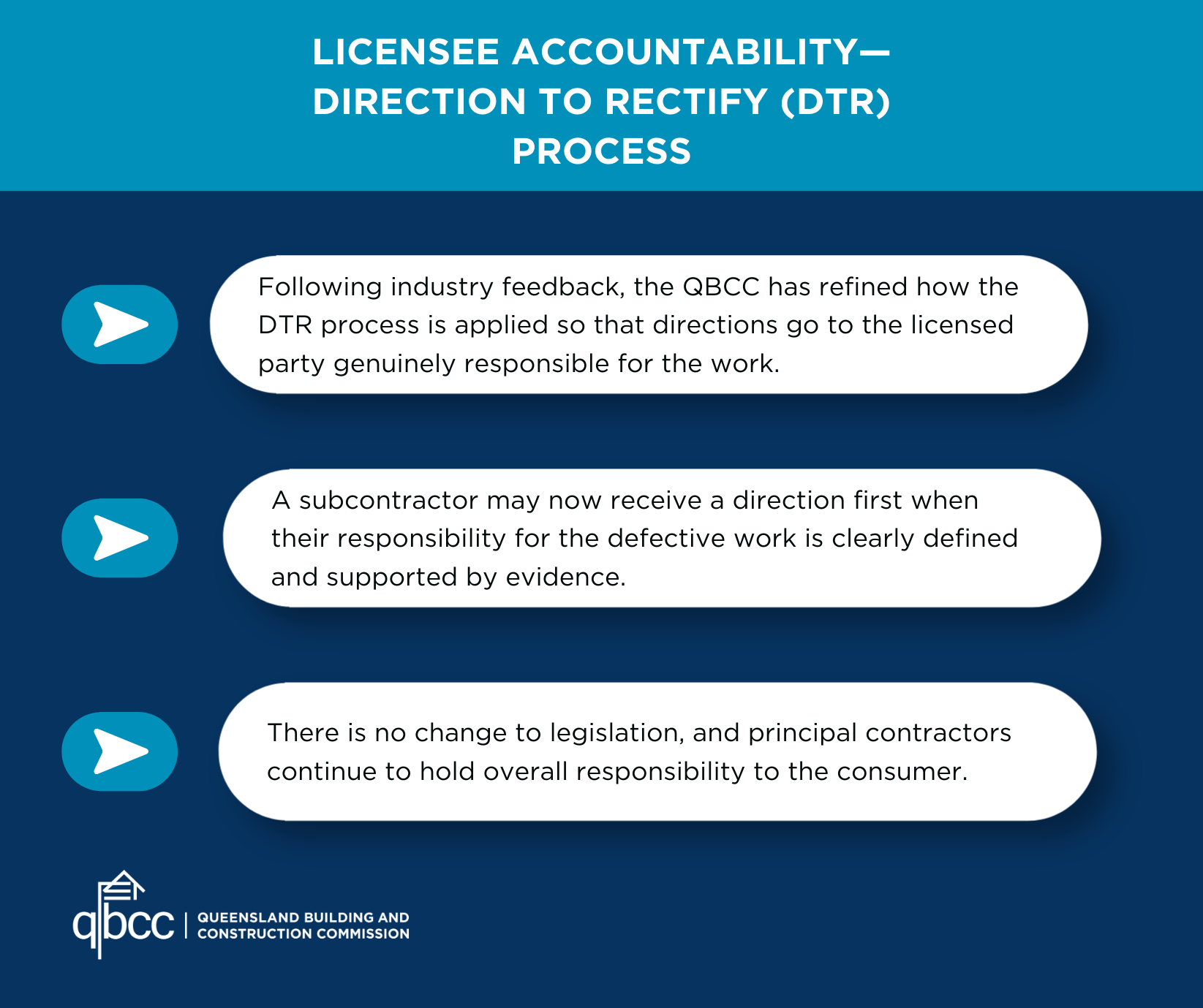
Under this clearer, evidence‑based approach, a subcontractor may now receive a direction first when their responsibility for the defective work is clearly defined and supported by evidence. There’s no change to legislation, and principal contractors continue to hold overall responsibility to the consumer.
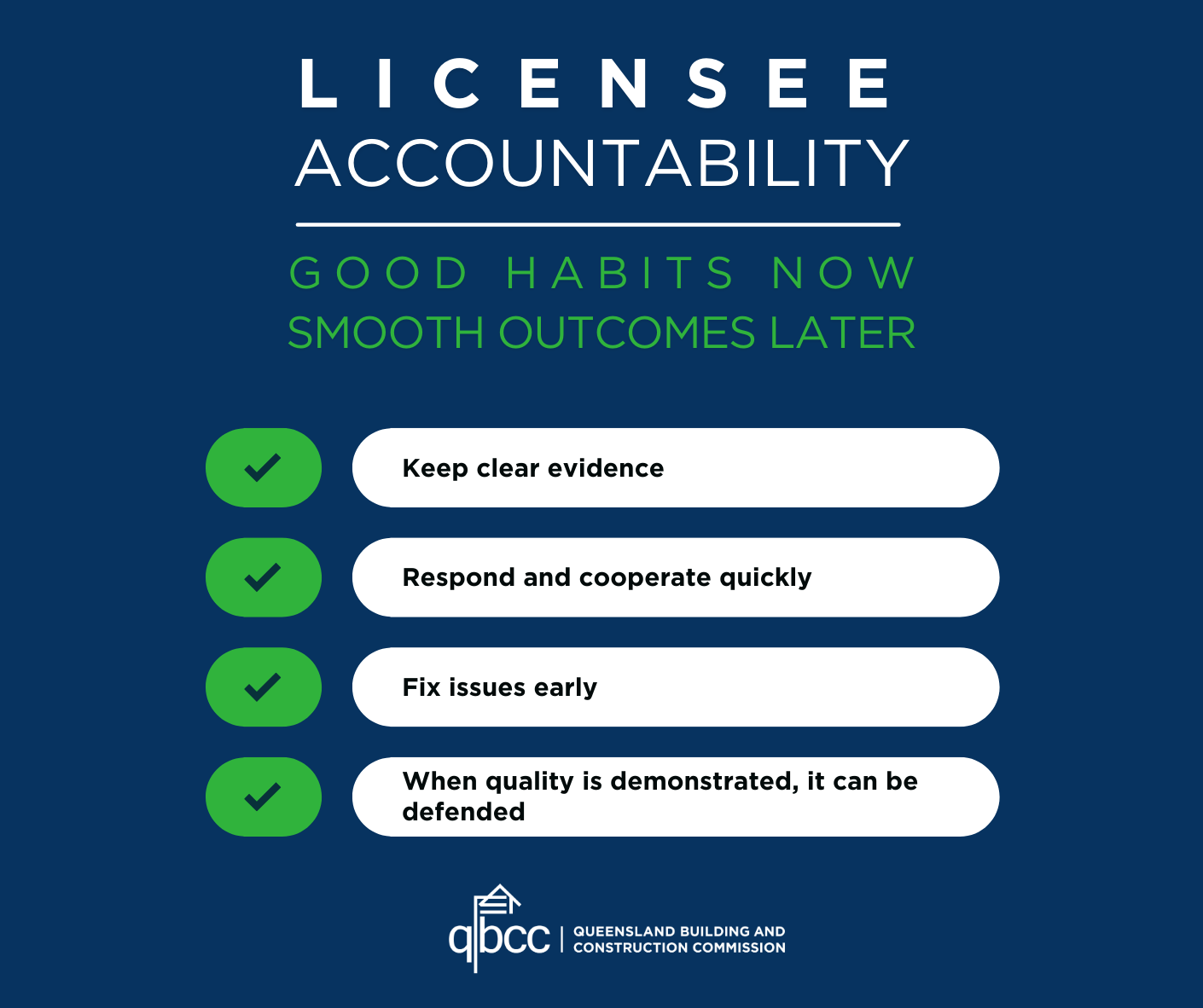
For licensees, the message is simple: when quality is demonstrated, it can be defended. Clear documentation makes it easier to show who did what, when—helping to ensure decisions are fair, consistent and directed to the right party.
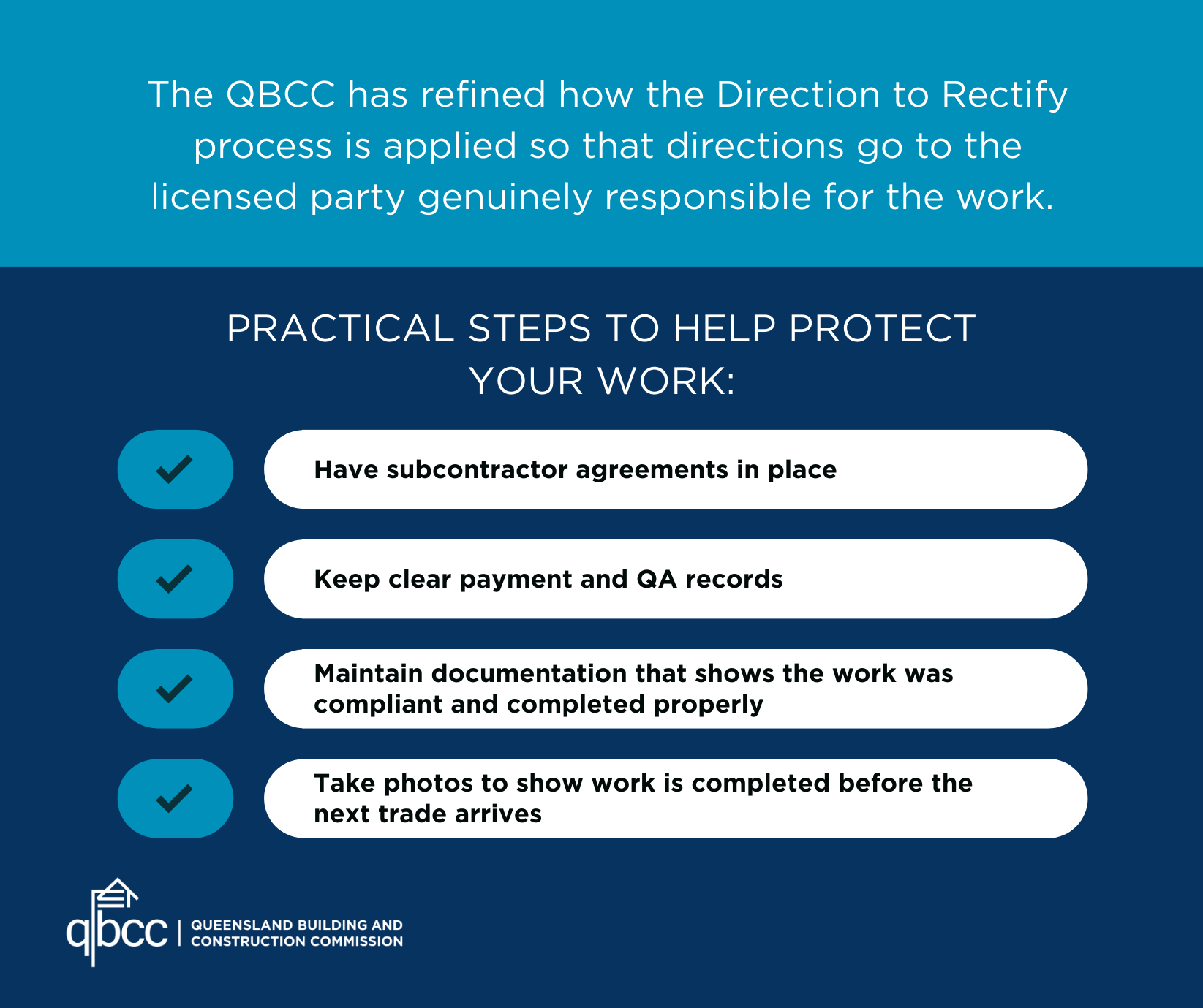
Practical steps you can take include:
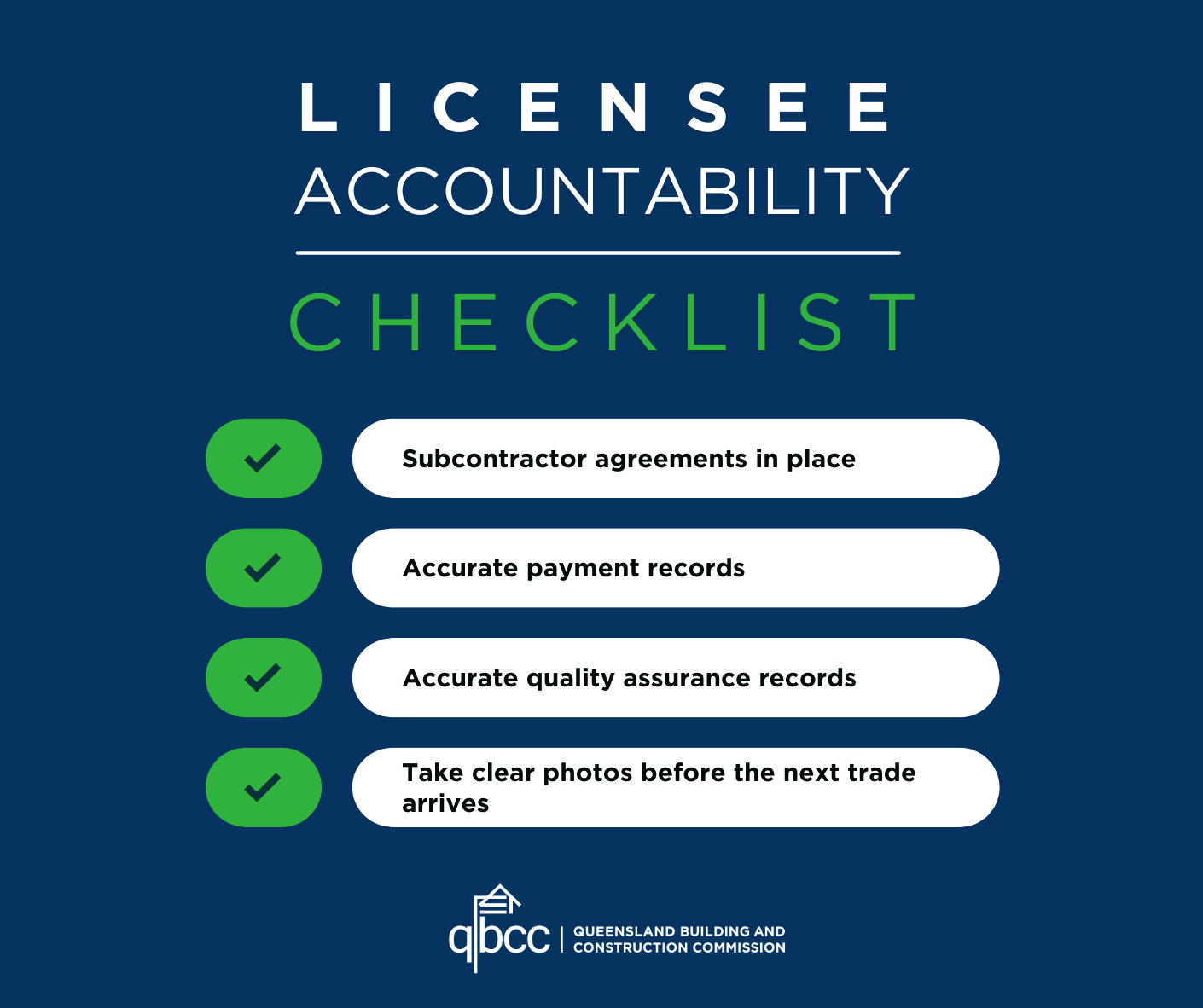
- having subcontract agreements in place
- keeping records of payments and QA documents
- taking photos to show work was completed properly before the next trade arrived.
These improvements aim to support better building outcomes, fewer disputes, and greater confidence across the whole industry—helping you protect your work and your reputation.
Social media content
Important note: 940x788pxl social tiles are suitable for Facebook, Instagram and LinkedIn—right-click image / save as
Post 1
The QBCC has clarified how accountability applies across licensed parties under the existing Direction to Rectify (DTR) process. When quality is demonstrated, it can be defended—supporting fair, transparent decisions across the industry.
Image
| Image
|
Post 2
Clear subcontract scopes and good evidence help ensure Directions to Rectify go to the right party. No change to legislation—just clearer, more consistent processes.
Image
| Image
|
Post 3
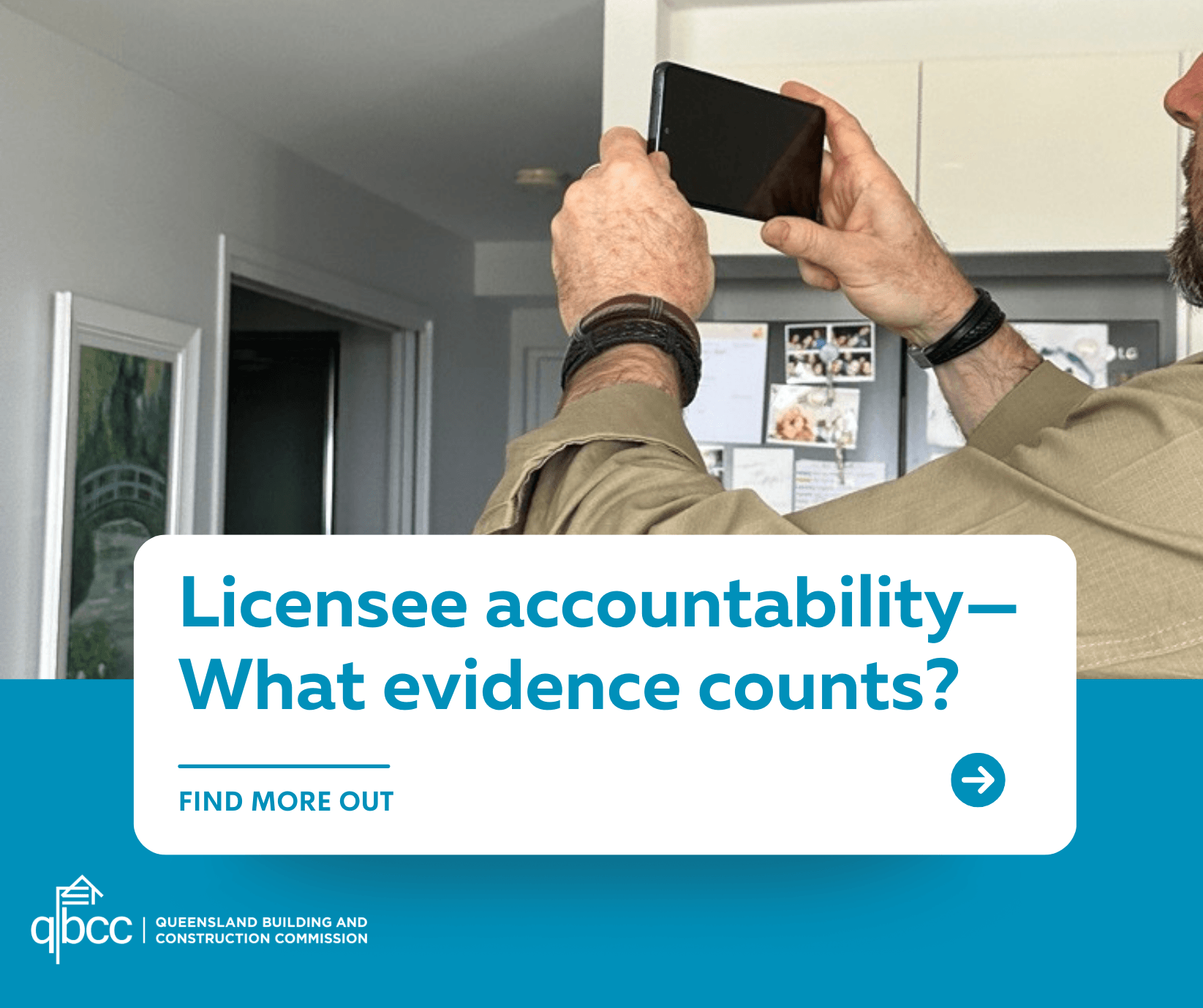
We know that the majority of trades are doing the right thing, taking care to ensure their work is completed, compliant and up to standard. But you may not be the only one on site or on the job. Good records make responsibility clear. Capture photos and documentation as you go to protect yourself and your work.
Image

| Image
|
Post 4
Good records make responsibility clear. Photos, agreements and dated file notes help the QBCC make fair, consistent decisions when defects arise.
Image
| Image
|
Post 5
Clear, consistent evidence helps show the work was done properly and makes responsibility easier to confirm when issues arise. When quality is demonstrated, it can be defended. Do the work properly and to code. Supervise the work you are responsible for.
✅Keep clear evidence — contracts, scopes, payment records, photos and documentation.
✅Respond and cooperate quickly — engage promptly with defect notifications and site inspections and provide requested documentation.
✅Fix issues early — rectify defects when first notified to prevent escalation.
Image
| Image
|