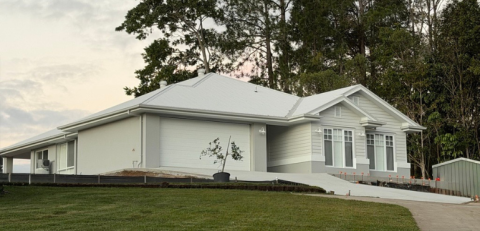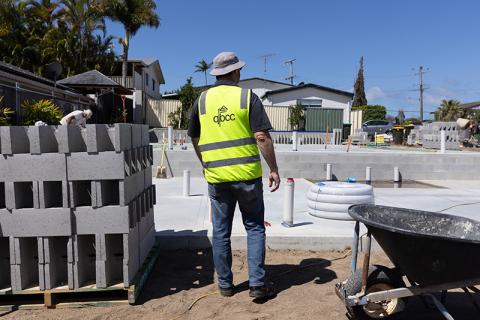
One of the most important is the Queensland Home Warranty Insurance Scheme, administered by us, the QBCC.
What is the Queensland Home Warranty Scheme?
The scheme is an insurance premium your contractor pays us to insure residential construction work for fixed-price and cost-plus residential contracts.
It’s designed to protect property owners from loss if:
- if your contractor does not, or cannot, finish the work you contracted them to do
- if your contractor does not fix defects
- if the building suffers from subsidence or settlement (aka sinking or shifting ground).
Who takes out the cover?
You are responsible for the cost of the premium, but your contractor pays the amount to us to insure the work. The premium amount is:
- collected from you and paid to us by the contractor
- included as part of your contract
- paid before work begins · compulsory for all residential construction work valued at more than $3,300 (including cost of materials, labour and GST).
Important: Always use a licensed contractor. If your builder isn’t licensed, you won’t be covered by the scheme*. Learn more about finding a licensed contractor and checking their licence status and history on the QBCC’s Home Owner Hub.
* Unless the unlicensed contractor:
- fraudulently claims to hold a licence; or
- makes a representation that would cause a reasonable person to believe the work is covered by the scheme.
How do I know I’m covered?
Once the insurance is taken out by the licensed contractor, you should receive a Notice of Cover by email. This document confirms your coverage and outlines the scope and timeframes.
If you don’t receive it, contact your licensed contractor. Sometimes builders mistakenly enter their own email address instead of yours when submitting the insurance paperwork.
What does it cover?
The scheme covers:
- Structural defects (covered for 6 years and 6 months)
These affect the safety, stability, or functionality of your home. Examples include:- cracked foundations
- roof framing issues
- water ingress through walls
- unsafe balconies or stairs.
- Non-structural defects (Covered for 6 months)
These affect the appearance or finish of the work. Examples include:- peeling paint
- uneven tiling
- misaligned cabinetry.
It also covers non-completion of work if the builder fails to start or finish the project.
What isn’t covered?
There are important exclusions:
- buildings over three storeys (excluding one storey used mainly as a carpark) are not covered. This means many apartment buildings fall outside the scheme’s cover, so make sure you’re not charged if undertaking work on an excluded apartment building.
- commercial buildings like warehouses and office blocks
- driveways, paths, fences, air conditioning, hot water systems, security doors and landscaping.
Learn more about what work is and isn’t covered.
How much does it cost?
The premium varies based on the value of the work, including materials and labour. Refer to our premium tables for cost breakdowns for:
For example, if your renovation costs $30,000, the premium you will be charged is approximately $400.
Important timeframes
If you experience issues, you must claim within a fixed time limit:
- For defective work:
- Structural defects: Lodge your claim within 3 months of noticing the defect, and within the 6 years and 6 months coverage period.
- Non-structural defects: You must notice the defect within 6 months of completion and lodge your claim within 7 months.
- For non-completion:
- If work has started, the contract must end within 2 years of the start date.
- If work has not started, the contract must end within 2 years of signing.
- You must lodge your claim within 3 months of the contract ending.
Make a claim
In the first instance, we recommend speaking directly with your contractor to resolve the issue. If that doesn’t provide the outcome you hoped for, learn about the claims process for each of the following: