Queensland’s building workforce is ageing

What the QBCC Industry Snapshot reveals and why it matters.

Image
Two workers in high visibility shirts looking at housing plans

Queensland’s building and construction industry is facing a demographic shift that demands urgent attention.  

The latest QBCC Industry Snapshot reveals that the average age across all licence classes (excluding fire protection) is now almost 49 years. In some categories, such as Builder – Open (54 years) and Joinery (53 years), the figures are even higher.

Meanwhile, the number of individuals under 30 comprise just 6 per cent of our 122,000+ licensees.

This is more than just a statistic- it highlights a growing imbalance between experienced professionals nearing retirement and the limited number of younger workers entering the trade-specific workforce.  

Without strategic intervention, Queensland risks a skills vacuum that could stall progress on critical infrastructure projects and compromise the quality and safety of the built environment, especially in the middle of a housing shortage and as preparations for the 2032 Olympic and Paralympic Games start to ramp up. 

Construction Skills Queensland (CSQ) Horizon 2032 Report

The CSQ Horizon 2032 Report paints a vivid picture of the decade ahead. Queensland’s construction pipeline is forecast to grow from $53 billion in 2024–25 to $77 billion by 2026–27, driven by population growth, the Brisbane 2032 Olympic and Paralympic Games, and the transition to net-zero energy.

However, this boom comes with a workforce challenge. The report projects a peak demand of 156,000 construction workers in 2026–27, with an average shortfall of 18,200 workers annually over the next eight years.  

Key trades such as carpentry, plumbing, electrical and concreting are expected to lead this demand. 

Succession planning 

What this report also reveals is an area of contention – one that raises the question about succession planning no longer being a luxury, but a necessity to support the building and construction industry across Queensland.  

As seasoned tradespeople retire, the risk of losing decades of expertise grows, but by actively looking to the future, succession planning ensures: 

  • continuity of business operations
  • preservation of trade knowledge
  • maintenance of safety and compliance standards
  • timely delivery of infrastructure projects. 

Without a steady pipeline of younger workers, Queensland’s ability to meet its infrastructure commitments could all be compromised if solutions aren’t found.  

What the Industry Snapshot tells us 

The QBCC Industry Snapshot provides a data-informed overview of licensing trends, age demographics and workforce maturity. It’s a valuable tool for identifying succession risks and planning workforce development strategies.  

The snapshot also highlights: 

  • regional disparities in workforce age
  • licence classes with critical ageing trends
  • opportunities for targeted workforce renewal. 

What can be done 

To address the ageing workforce and skills shortage, a multi-pronged strategy is needed: 

1. Reform occupational licensing and improve labour mobility 

The Queensland Productivity Commission (QPC) supports reforms such as Automatic Mutual Recognition, streamlined licensing processes and recognition of prior learning.  

These changes aim to reduce barriers to workforce entry and improve workforce flexibility. 

2. Align vocational education with industry needs 

Recent investments including a $115 million funding package under the National Skills Agreement aim to improve completion rates, expand access to foundation skills, and support training in emerging industries and trades.  

However, studies show a misalignment between vocational education and training (VET) enrolments and actual labour market needs, with over-enrolment in low-demand areas like fitness-related careers and under-enrolment in critical trades needed in the building and construction sector.  

3. Promote trades as professional, purpose-driven careers 

Trades are professional career pathways that people should be proud to embark on and campaigns looking at recruitment, study and retention should highlight this as well as the professionalism and entrepreneurial opportunities that exist in this space.  

This shift in messaging can help attract younger talent and diversify the workforce. 

4. Support mature workers and lifelong learning

Older workers remain a valuable asset. Strategies such as blended roles, flexible shifts, and targeted health and safety support can extend their participation and reduce injury risks. This cohort can also share their knowledge and experience and teach the tricks of the trade to the next generation coming through.

5. Strengthen industry-government collaboration

One of the most effective ways to future-proof Queensland’s building and construction workforce is through stronger collaboration between industry and government.  

This is where programs like Industry Skills and Jobs Advisors (ISJA) and Regional Jobs Committees play a pivotal role.

What does this collaboration look like?

These programs act as a bridge between employers, training providers and government decision-makers, ensuring that workforce planning is grounded in real-world industry needs. They gather evidence-based insights into: 

  • skills gaps and emerging jobs
  • regional workforce challenges
  • training quality and relevance
  • employment trends and future demand. 

By doing so, they help shape VET programs that are aligned with actual labour market needs, not just theoretical projections. 

Why is this needed? 

Without coordinated planning, training investments risk being misdirected and lead to an oversupply of graduates in fields and industries that aren’t facing a skills shortage like the building and construction sector.

Industry-government collaboration helps: 

  • target training investments where they’re most needed (for example, carpentry, plumbing, electrical)
  • reduce duplication and inefficiency in workforce programs
  • support regional communities with tailored skilling solutions
  • ensure reforms are timely and responsive, especially in licensing and labour mobility. 

Examples of impact 

The ISJA program, expanded in 2025 with a $17 million investment, now supports 14 key industry sectors including construction. Advisors provide strategic advice to government on training priorities, licensing reform, and workforce development.  

Regional Jobs Committees operate in 12 locations across Queensland, developing localised strategies to address workforce shortages and connect stakeholders with funding, training, and employment pathways.  

Together, these initiatives help ensure Queensland’s workforce strategy is proactive, helping the construction industry build the talent pipeline it needs for the decade ahead. 

Looking ahead 

The ageing of Queensland’s building workforce is a challenge, but it also presents an opportunity that can future-proof the industry and turn Queensland into the building capital of Australia. By leveraging data from the Industry Snapshot, embracing reform, and investing in strategic workforce development, Queensland can build a resilient, future-ready construction sector.

We encourage all stakeholders, builders, educators, policymakers, and regulators to treat succession planning as a strategic priority. The time to act is now.

Explore the full QBCC Industry Snapshot for more insights. 


Last reviewed: 3 Dec 2025 Last published: 3 Dec 2025
Back to top

New digital QBCC licence a fast, convenient option

Queensland’s building regulator is ramping up its digital innovation and modernisation agenda with the launch of the QBCC digital licence.

Image
QBCC media releases

Queensland Building and Construction Commission (QBCC) CEO and Commissioner, Angelo Lambrinos, said the digital licence is a major step forward in delivering on the commitment to make it easier to do business with the QBCC.

“The QBCC digital licence is part of a broader program to modernise our services while ensuring the public and industry can continue to trust the strength and transparency of the QBCC licensing system,” Mr Lambrinos said.

“It is something the Queensland Government promised and something the industry expects of a modern and contemporary regulator. This significant evolution in our digital transformation is an important signal that we are listening and responding.

“For industry, this means more convenience; and for home owners, it provides greater assurance that contractors are properly licensed,” Mr Lambrinos said.

Licensees can now carry their licence on their phone, access real-time updates, and manage multiple licences in one place.

The new digital licence is an optional extra for licensees and provides a secure, convenient, real-time alternative to a physical licence card.

“For licensees, this means less waiting and fewer hoops to jump through. It's designed to streamline how they manage their licence, freeing them up to focus on what they do best—running their business, leading their team, and getting the job done.

“We’re also increasing home owner awareness of the importance of using a licensed contractor and highlighting how it’s now easier than ever to verify a licence.”

The QBCC started rolling out a pilot program for digital licences in September 2025, initially offering the option to Site Supervisor licensees and Pool Safety Inspectors. The digital option is now available to more than 105,000 QBCC licensees.

The QBCC digital licence has been developed in partnership with the Queensland Government and Transport and Main Roads as part of the Queensland Government Digital Licence App.

The Queensland Government has also issued a media statement today about QBCC digital licensing:


Last reviewed: 6 Nov 2025 Last published: 6 Nov 2025
Back to top

Spotlight on TIACS: Making conversations about mental health easier 

Queensland Mental Health Week (4–12 October) shines a light on the importance of mental wellbeing in our communities and industries. 

Image
tradespeople man woman conversation

For the building and construction sector—where long hours, tough working conditions and job pressures are part of daily life—access to mental health support is critical. 

One service breaking down barriers to support is TIACS – This Is A Conversation Starter

Who are TIACS? 

TIACS is a not-for-profit counselling service that provides free, confidential support by text and phone for tradies, truckies, rural, and blue-collar workers, as well as their families. TIACS was established to make help-seeking simple, approachable, and stigma-free. 

Why their work matters 

For many in construction, traditional mental health services can feel hard to access. Costs, waiting lists, and the stigma of “not being tough enough” can all stop workers from reaching out. TIACS removes those barriers by offering an immediate and friendly way to start a conversation with a qualified counsellor—no paperwork, no referral, no judgment. 

How TIACS can help 

TIACS provides: 

  • Free counselling with qualified professionals (no time limits, no cost).
  • Text and phone support to suit busy schedules and remote worksites.
  • Practical tools and strategies to cope with stress, anxiety, depression, or tough personal situations.
  • Support for families—because challenges at work often affect home life too. 

Workers simply call or text, and they’ll be connected to someone who listens and understands. 

Real impact 

Since its launch, TIACS has supported thousands of blue-collar workers across Australia, with many saying it was the first time they felt comfortable reaching out. By meeting people where they are—on their phones, during a break, or after a long shift—TIACS has helped reduce stigma and start lifesaving conversations. 

Getting involved 

Share TIACS details with your teams and on worksites. 
Encourage staff and families to save the number in their phones. 
Use Mental Health Week as a reminder to check in with yourself and your mates. 

During Mental Health Week—and every week 

Mental health is not a one-week focus. TIACS is available year-round, making it easier for workers and their families to get support whenever it’s needed. 

Call or text TIACS: 0488 846 988 (Mon–Fri, 8am–10pm AEST) 

Learn more: www.tiacs.org

Because starting a conversation could be the first step to saving a life. 


Last reviewed: 3 Oct 2025 Last published: 8 Oct 2025
Back to top

Spotlight on MATES in Construction: supporting mental health in our industry 

Queensland Mental Health Week (4–12 October) is a reminder that mental health and wellbeing are just as important as physical safety on every worksite. One organisation making a real difference in our industry is MATES in Construction. 

Image
tradesmen builders house frame

Who are MATES in Construction? 

MATES in Construction is a not-for-profit organisation established to reduce the high rates of suicide and mental health issues in the building and construction industry. Through tailored programs and on-the-ground support, MATES works directly with workers, employers, and industry partners to break down stigma, start conversations, and connect people to help. 

Why their work matters 

Construction workers face unique challenges—long hours, physical demands, project pressures, and a culture that often discourages speaking up. Tragically, construction workers in Australia are more than twice as likely to die by suicide than the general population. MATES tackles this head-on with programs designed by the industry, for the industry. 

How MATES can help 

MATES provides a range of services and supports: 

  • General Awareness Training (GAT): Short, site-based sessions that equip workers to recognise when a mate might be struggling.
  • Connector training: Equips volunteer workers to act as go-to contacts who can provide immediate support and connect colleagues with professional help.
  • ASIST (Applied Suicide Intervention Skills Training): Specialist training for supervisors and leaders to step in during critical moments.
  • 24/7 helpline (1300 642 111): Immediate, confidential support for workers and their families.
  • Case management and field officers: MATES staff visit worksites to provide ongoing advice, support, and referral to professional services. 

Real impact, real stories 

MATES has already supported thousands of workers across Queensland. Success stories include site connectors who have stepped in to support colleagues in crisis, and workplaces where cultural change has made it easier to talk openly about stress, anxiety, and depression. These grassroots connections have saved lives. 

Getting involved 

Worksites, businesses, and individuals can: 

  • Host a General Awareness Training session.
  • Encourage staff to train as Connectors.
  • Display MATES materials on site.
  • Share the 24/7 support number with colleagues and families. 

During Mental Health Week—and beyond 

MATES in Construction reminds us that mental health is not a one-week conversation. By embedding these supports into our worksites year-round, we can make sure every worker has a mate looking out for them.

If you or someone you know needs help, call MATES 24/7 on 1300 642 111 

Learn more: www.mates.org.au 


Last reviewed: 6 Oct 2025 Last published: 6 Oct 2025
Back to top

Stay ahead in service trades: The Service Trades Council’s role in industry collaboration

The Service Trades Council (STC) plays a vital role in connecting and supporting professionals across the service trades industry. 

Image
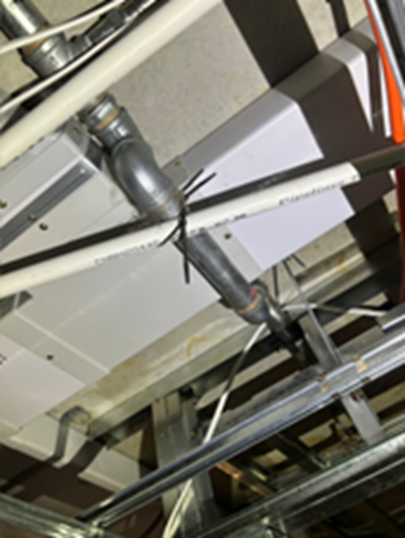
grey plumping pipes

Whether you’re a licensed plumber, fire protection specialist, drainer, or work in air-conditioning and mechanical services, staying informed about industry developments and regulatory changes is crucial.

STC actively collaborates with key industry regulators like the Queensland Building and Construction Commission (QBCC) and local councils to ensure the voice of service trades professionals is heard. Through these partnerships, STC provides direct access to important updates on compliance, licensing, and emerging best practices.

By engaging with STC, trades people have the opportunity to:

Gain insights from respected industry leaders and regulatory experts

Participate in meaningful dialogue that shapes the future of the sector

Network and build connections with peers and stakeholders across the industry

STC’s commitment to open communication and advocacy makes it a trusted hub for anyone working within service trades, fostering an environment where collaboration and continuous learning thrive.

STC Forum BundabergWednesday 15 October

STC, in partnership with the QBCC and Bundaberg Local Council are holding the next STC Forum on Wednesday 15 October at Burnett Riverside Hotel from 4-7pm.

To attend this free event, please register below:

Register here


Last reviewed: 25 Sep 2025 Last published: 25 Sep 2025
Back to top

The QBCC joins forces with Ai Group on industry compliance

The Queensland Building and Construction Commission (QBCC) is proud to partner with the Australian Industry Group (Ai Group) to deliver interactive sessions this week aimed at strengthening compliance, clarity, and connection across Queensland’s construction sector.

Image
hard hat tradesperson vest event

These free sessions are tailored to support builders, subcontractors, developers, and advisors by unpacking key regulatory requirements and offering practical guidance on licensing, financial obligations, and FSC WHS accreditation. 

Why attend?

  • Learn directly from QBCC and FSC experts
  • Understand licensing and financial requirements
  • Discover how to gain FSC WHS accreditation
  • Explore opportunities in federally funded and state construction projects

Whether you're navigating the complexities of compliance or looking to position your business for federally funded projects, this is an opportunity not to be missed.

As Queensland’s building regulator, the QBCC is deeply committed to community education and industry engagement. The QBCC’s Executive Director of Regional Services, Mick Allen, will be a featured guest speaker at the Brisbane session, bringing expert insights into licensing classes, financial requirements, and the support services available to industry professionals.

This collaboration with Ai Group reflects the QBCC’s ongoing commitment to working alongside peak bodies and empowering industry stakeholders with the knowledge and tools they need to thrive in a rapidly evolving landscape.

Brisbane event details – don’t miss it!

  • Date: Wednesday 17 September 2025
  • Time: 7:00am–10:00am
  • Location: Sofitel Brisbane Central, 249 Turbot Street
  • Cost: Free
  • Registration: Register here now

Other locations

Following Brisbane, the series continues in Cairns:

  • Date: Friday 19 September 2025
  • Time: 7:00am–10:00am
  • Location: Pullman Cairns International, 17 Abbott Street
  • Registration: Register here now 

Last reviewed: 14 Sep 2025 Last published: 14 Sep 2025
Back to top

Join the QBCC at the Brisbane Home Show

Thinking about building or renovating your home? Visit the Queensland Building and Construction Commission (QBCC) at the Brisbane Home Show from 19-21 September for trusted advice from our industry experts. 

Image
home show lightbulb letters

On the third and final day of the event (Sunday 21 September at 1.30pm) the QBCC’s experienced team will present a must-attend session designed to guide home owners through the building and renovation process from start to finish. The session will cover essential topics including:

  • how to find a licensed contractor in your local area
  • ways to check a contractors’ previous work
  • navigating contracts and deposits
  • managing variations
  • resolving disputes and more.

You’ll also hear about helpful new resources like the Home Owner Hub and the rollout of digital licences for QBCC licensed contractors—both designed to improve your building or renovation experience and make it easier for home owners to engage with the QBCC.

Where to find us

Throughout the three-day event, the QBCC’s team will be available at booth L 08 to answer your questions, offer practical insights, and help you make confident, informed decisions—whether you’re just starting out or already mid-project.

Don’t miss your chance to connect with industry experts—visit the QBCC at the Brisbane Home Show this September.

In the meantime, visit the QBCC’s Home Owner Hub for guidance through every stage of your building and renovating journey. 

Brisbane Home Show

Date:  19-21 September 2025 (Friday to Sunday)

Time: 9am-5pm daily

QBCC booth: L 08

QBCC information session: Sunday 21 September at 1.30pm

Location: Brisbane Convention and Exhibition Centre, Merivale Street, South Brisbane 


Last reviewed: 14 Sep 2025 Last published: 14 Sep 2025
Back to top

Building alert – oversized penetrations in ply bracing panels may reduce structural integrity

The Queensland Building and Construction Commission (QBCC) has identified issues with oversized holes being cut into structural plywood bracing panels. These penetrations can reduce the bracing capacity of a structure and create compliance risks.

Image

This alert provides guidance from the Engineered Wood Products Association of Australasia (EWPAA) and Timber Queensland on what constitutes acceptable practice.

Image
structural-plywood-bracing-panels-penetration-holes-example


Why this matters

  • Oversized holes reduce the structural integrity of buildings.
  • Proactive inspections have identified repeated instances across Queensland.
  • Following EWPAA guidance will help maintain compliance.

Acceptable penetrations in ply bracing panels

According to the EWPAA:

  • A neat hole (not overcut) up to 100 mm x 100 mm may be cut within 100 mm of vertical and top edges, and 200 mm of the bottom edge of the panel.
  • Multiple 100 mm x 100 mm holes are allowable within this envelope, but centres must be at least 600 mm apart.
  • One hole up to 400 mm x 400 mm is acceptable if located between studs, framed with nogging, and fixed as required for top and bottom plates.
Image
timber-queensland-ewpaa


Helpful links

Further information


Disclaimer: The information in this building alert is for educational purposes only. Although the QBCC endeavours to provide accurate and current information, it does not guarantee that the information communicated in this building alert will continue to be accurate and current in the future. The QBCC is not liable for any claims arising from incorrect or out-of-date information or any decisions or actions made based on the information contained in this building alert. The information conveyed in this building alert does not constitute legal or other specialist advice and should not be relied upon as such.


Last reviewed: 1 Sep 2025 Last published: 1 Sep 2025
Back to top

Don't leave your digital door unlocked

Weak passwords are like leaving your ute unlocked overnight. Switch to a strong passphrase.

Image
cyber security tradie ute digital passwords

As the QBCC continues to expand its digital capabilities, it is more important than ever to keep your online accounts secure.

Whether you are logging into your myQBCC account, checking email or managing your business apps, your password is often the only thing standing between you and a cybercriminal.

Why passphrases matter

A passphrase is a longer, more secure version of a password. Think of it like upgrading from a screen door to a steel one. Good passphrases are:

  • at least 14 characters long
  • made of four or more unrelated words
  • unique to each account.

Avoid names, phrases or anything that could be guessed. The more random, the better.

Add extra protection with MFA

Wherever possible, turn on multi-factor authentication (MFA). It means even if someone guesses your passphrase, they cannot get in without a second step. Like a code sent to your phone.

Use a password manager

Keeping track of different passphrases does not have to be hard. Password managers help you generate, store and fill in passwords automatically.

A few minutes of effort = long-term protection.

Passwords should be treated like tools of the trade—essential to protect. Protect it like your job depends on it…because it does.

Quick links

For guidance from trusted sources, visit:


Last reviewed: 29 Aug 2025 Last published: 29 Aug 2025
Back to top